Spring 2024 AGI Seminar Recap
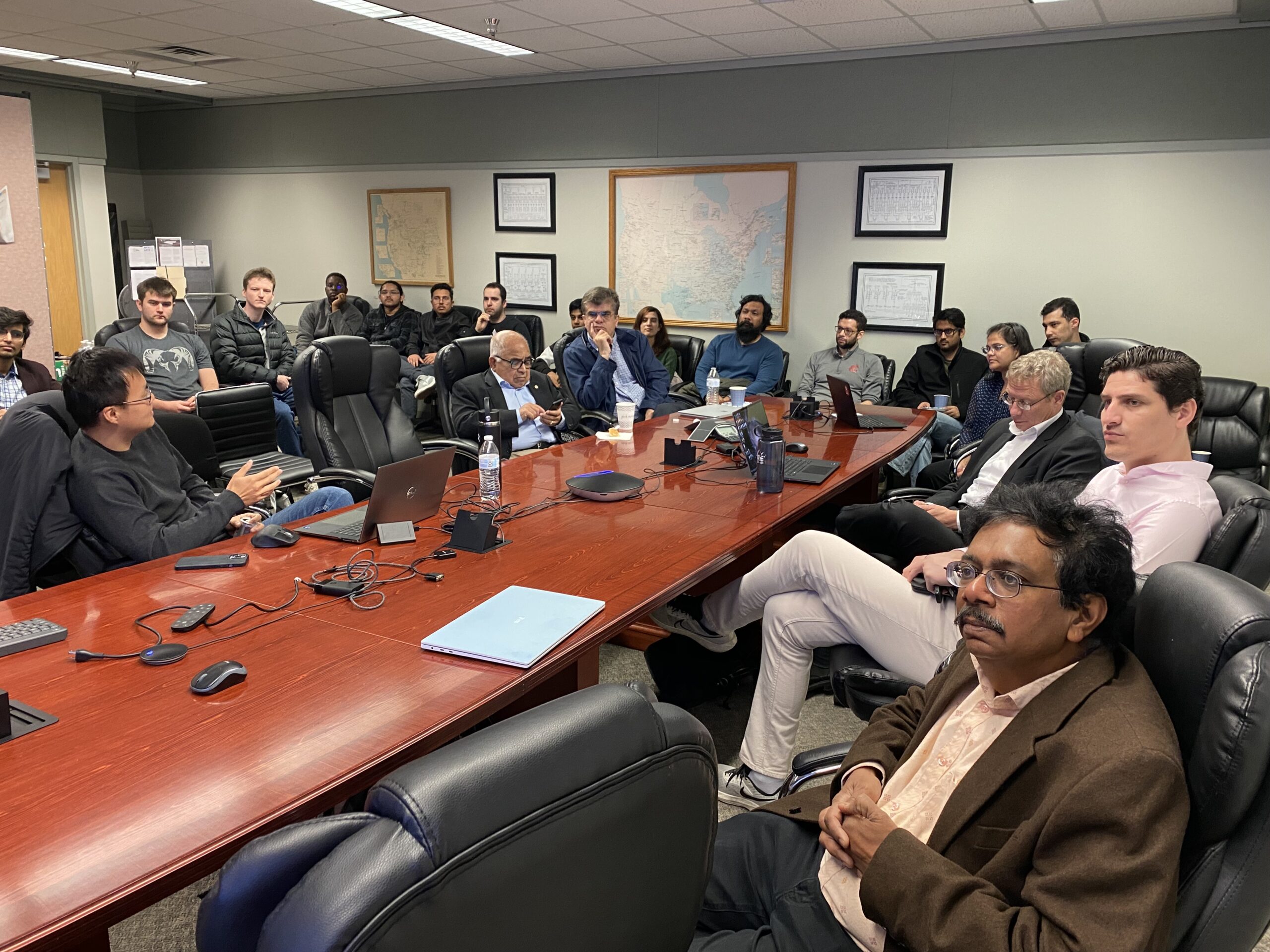
Over the course of the Spring 2024 academic semester, AGI brought in speakers as a part of the AGI seminar series. The goal of the seminars was to bring in industry experts to highlight the important research and field work that is being done in the region in the energy sector.
The first speaker was Alison Colotelo from the Pacific Northwest National Laboratory (PNNL). Colotelo is a part of the hydropower program at PNNL and is the leader of the Waterpower Systems Science and Engineering team through the lab.
Colotelo’s presentation, titled “Hydropower & the Grid” began with her background in the STEM field. One of Colotelo’s first experiences in the STEM discipline was through a science camp, which led her to getting her undergraduate degree in forensic science.
“Over my time, I have kind of navigated into project portfolio management. I’m really organized, I like to make connections… That led me to my current role as the hydropower program lead,” Colotelo said.
Colotelo highlighted PNNL being one of the 17 national laboratories in the United States, and mentioned that PNNL is well known for chemistry, earth sciences, data analytics, electric grid modernization, energy storage, cyber security, and nuclear nonproliferation.
The next seminar in the series was with Shri Abhyankar from the optimization and control group at PNNL. Abhyankar’s talk was on “High-performance grid modeling, simulation, and visualization at PNNL.”
Abhyankar started the presentation with high performance computing and how it relates to power systems. “The strategy in high performance computing is divide and accelerate. You have a big problem, you divide it into smaller problems, and each sub-problem is assigned to different sub processors,” Abhyankar said.
Abhyankar said that a supercomputer is not needed to run high performance computing tools but can break down the processes to allow them to be done on a lower-powered device such as a laptop.
Some of the highlighted applications of high-power computing in junction with power systems were “Data analytics, machine learning, AI, GPU and quantum computing, and coupled infrastructures” according to Abhyankar.
The third of the AGI seminar series was presented by chief research scientist at PNNL, Timohty Salsbury. Salsbury’s research includes the application of control and optimization of energy systems.
Salsbury’s presentation was about PNNL’s “E-COMP Initiative” which stands for “Energy System Co-Design with Multiple Objectives and Power Electronics.” Salsbury began his presentation with a quick background about PNNL, including the office locations around the state, and the inception of the lab during the “Manhattan Project.”
“We try to align with DOE’s (Department of Energy) mission and in doing that, we develop our own objectives across a broad spectrum of the science domain,” Salsbury said.
The E-COMP project itself falls under the Energy Decarbonization umbrella of PNNL and is a lab-level initiative, with a five-year project forecast. E-COMP itself came about with the new drive to decarbonization.
AGI seminars occur monthly, bringing in speakers from WSU, PNNL, and beyond to talk about cutting-edge research and relevant information in the power electronics and power grid space. Students can gain valuable knowledge from these presentations as they develop their knowledge of the grid space further.